
Every market needs a first price. On Riffdex, that first price is the one fans paid in the presale. This post explains how a song's market opens, why trading stays locked until it does, and a design mistake I caught along the way.
A song is not tradeable on day one
When an artist launches a song on Riffdex, it becomes an AFT, an Audio Fungible Token. Owning it unlocks the song. But an AFT can't be traded until its market exists, and a market needs liquidity, meaning AFTs and USDC sitting in a pool that buyers and sellers trade against.
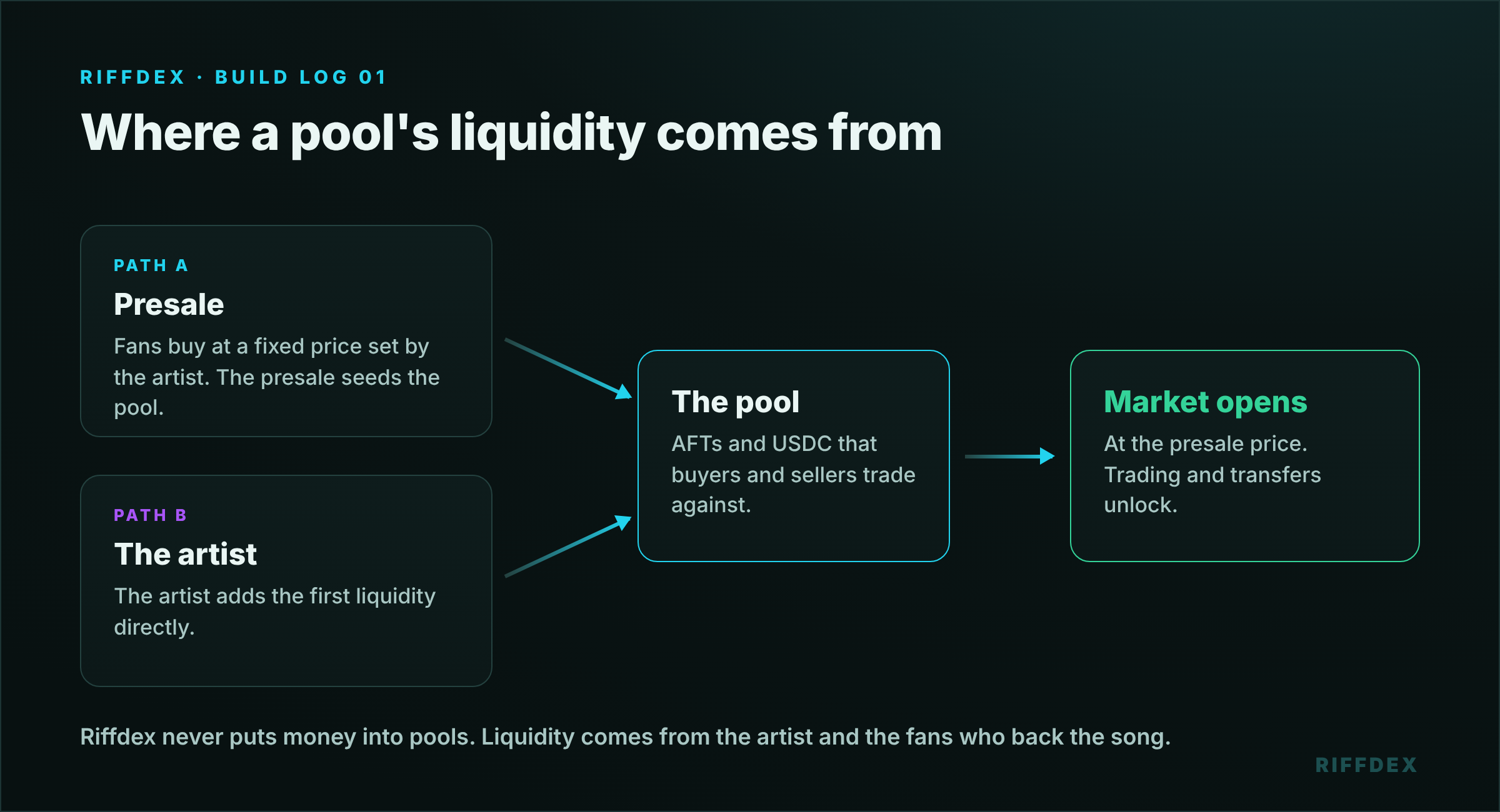
That liquidity comes from one of two places:
The presale. Fans buy the song at a fixed price set by the artist. When the presale ends, it seeds the pool.
The artist. An artist who skips the presale adds the first liquidity directly.
Riffdex does not put money into pools. The liquidity always comes from the artist and the fans who back the song.
Trading stays locked until the pool is live
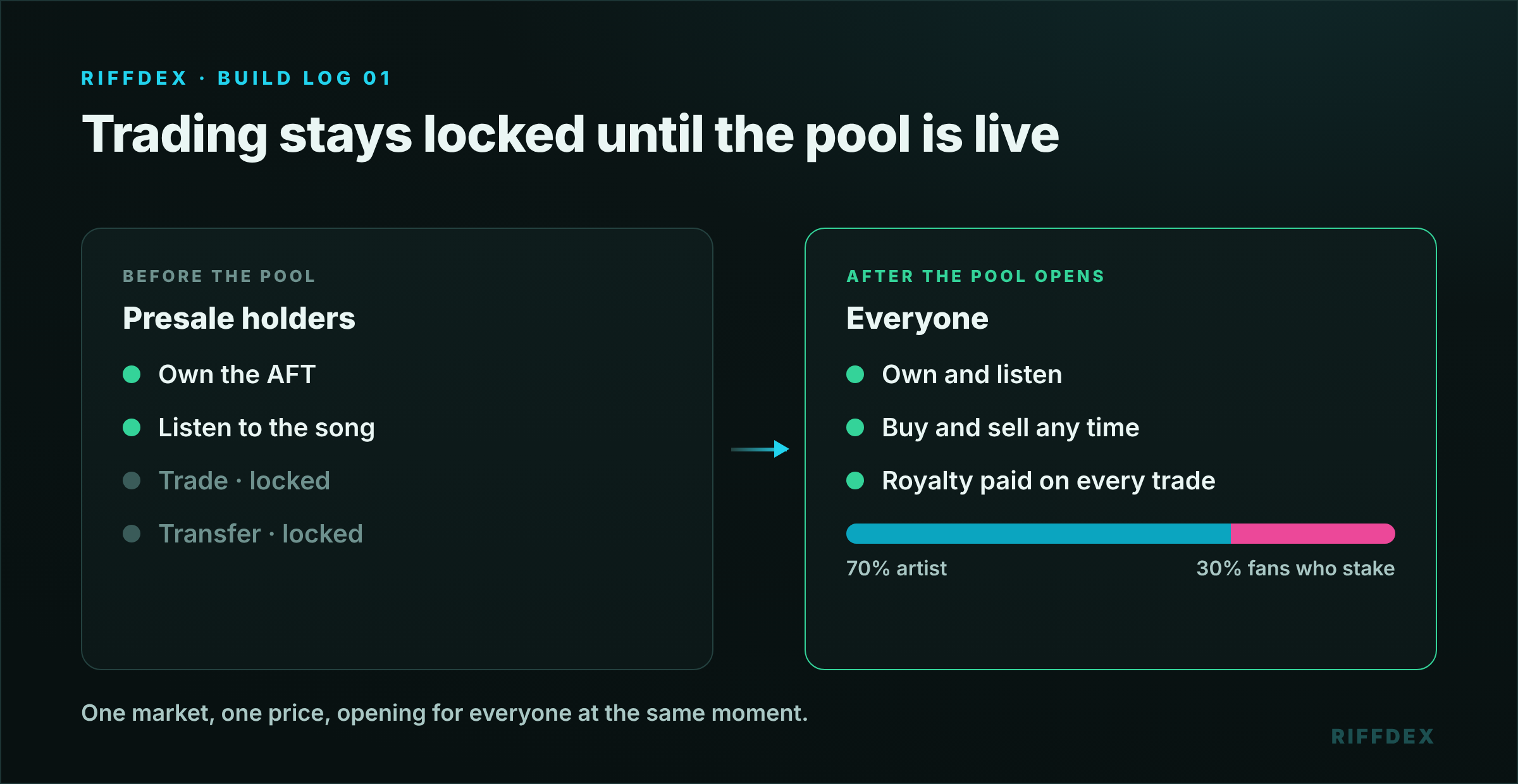
Until the pool exists, presale buyers own their AFTs and can listen to the song, but they can't trade or transfer them. That's deliberate. Without a pool there is no shared price, and tokens moving between wallets would trade at whatever price two strangers agree on. Locking transfers means the market opens in one place, at one price, for everyone at the same moment.
Why not a bonding curve
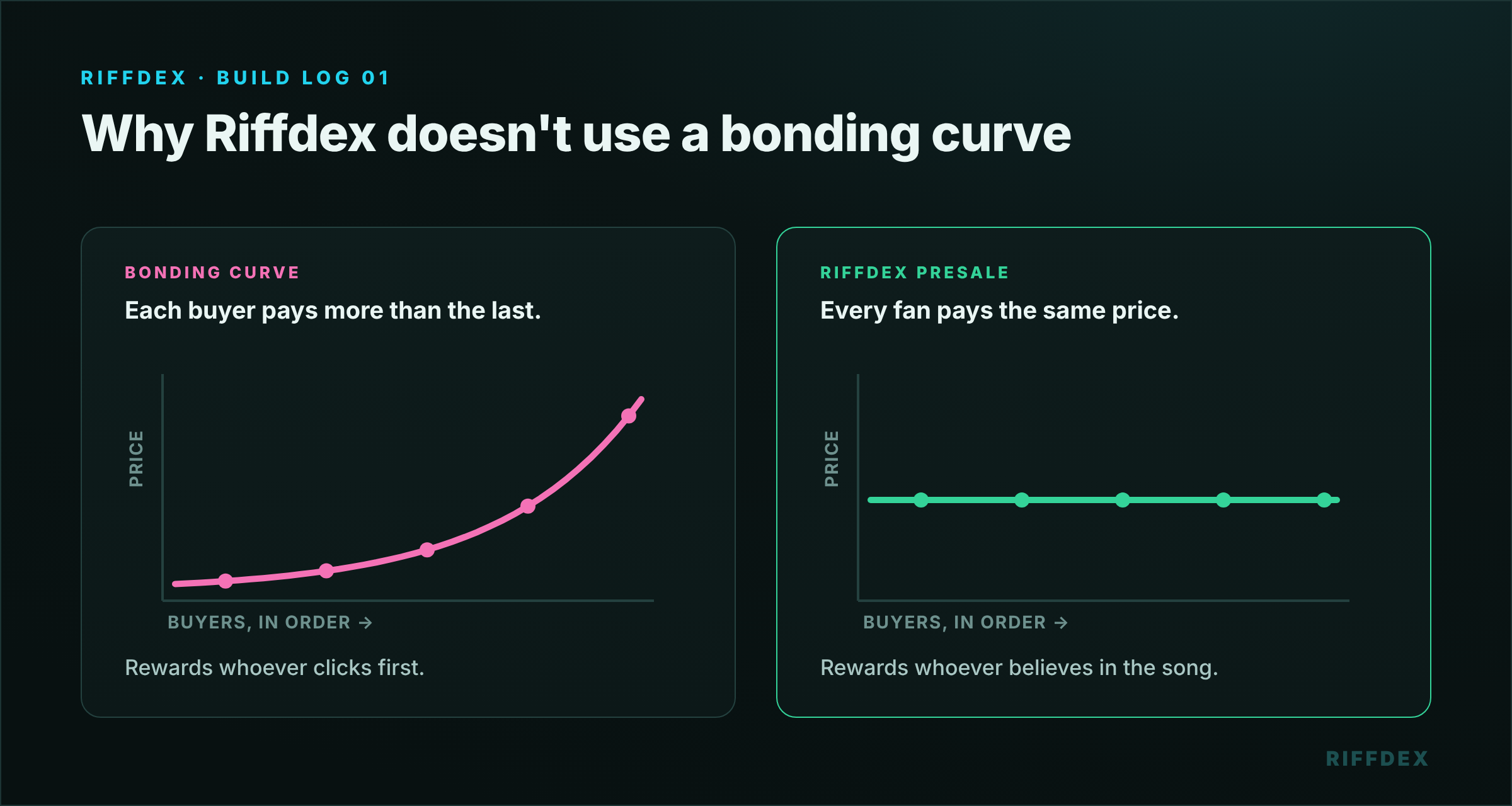
Many token launchpads use a bonding curve, where the price climbs with every purchase. The first buyer pays the least, and every buyer after pays more. That rewards speed. It turns a launch into a race to get in first and out first.
I wanted the opposite for music. In a Riffdex presale, every fan pays the same price. Someone who finds the song on day three pays what the first fan paid. The presale is about who believes in the song, not who clicked fastest.
Presales can be for superfans only
An artist can make a presale whitelist-only. Only wallets on the artist’s list can buy, so the first chance at a song goes to the people who already show up, like the fan club, the Discord, or the crowd at the last show. When the presale ends, the market opens to everyone at the same price
What I got wrong at first
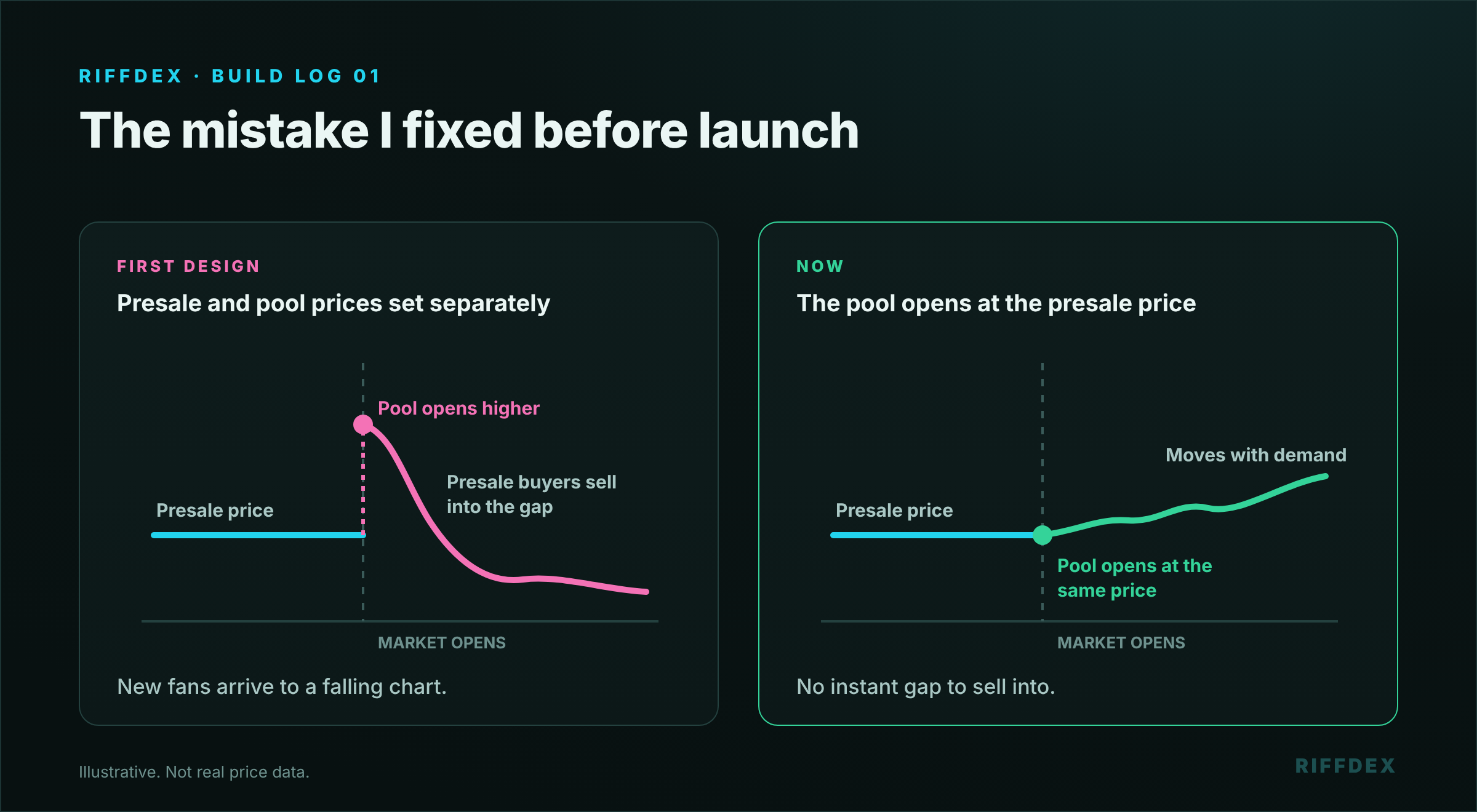
In my first design, the presale price and the pool's opening price were set separately. The pool could open at a higher price than fans paid in the presale.
That sounds like a reward for early fans. In practice, it gives every presale buyer a reason to sell the moment the market opens. If the pool opens above what you paid, selling right away locks in the difference. When enough presale buyers do that at once, the price drops in the first minutes of trading. A new fan arriving at launch sees a falling chart and leaves.
So I changed it. The pool now opens at exactly the presale price. Nobody gets an instant gap to sell into, and the first price the market shows is the price the song's first supporters agreed on. From there, the price moves with real demand.
What happens after the market opens
Once the pool is live, fans can buy and sell whenever they want. Every trade pays a royalty that's built into the song itself, 70% to the artist and 30% to the fans who stake it. The royalty starts with the first trade on the market.
The real reward for early fans
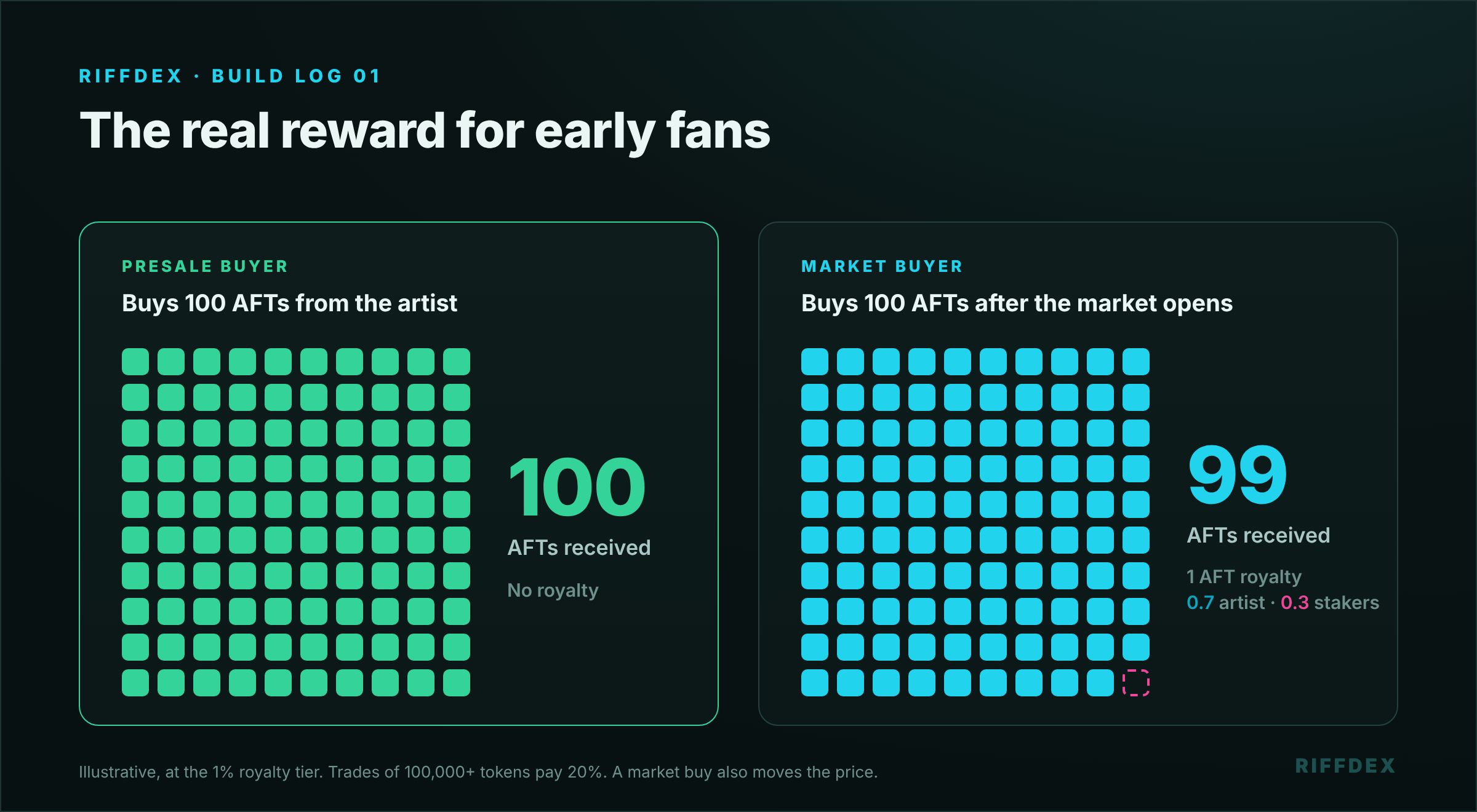
Removing the price gap raises a fair question. If early fans don’t get a cheaper price than the market opens at, what do they get?
They get the song without paying the royalty. Every AFT pays a royalty when it trades on the market, 1% on most trades and 20% on trades of 100,000 tokens or more. A presale purchase comes straight from the artist, so it’s royalty-free. A fan who buys in the presale receives every AFT they paid for. A fan who buys the same amount on the market right after it opens pays the opening price, then pays the royalty on top, and their buy also moves the price up.
The royalty also applies on the way out. A presale buyer who sells the moment the market opens pays the royalty on that sale. So the presale rewards fans for showing up early and holding, not for selling on day one.
What I still don't know
Two things I can't answer yet:
How much liquidity a pool needs. A thin pool moves a lot on every trade. I don't know yet how deep a pool needs to be for a song with a few hundred real fans to trade smoothly.
Whether artists will add more liquidity. The presale gets a pool started. I don't know if, or how quickly, artists will add more as their song grows.
How fans will respond to whitelist-only presales. I don’t know yet how artists will choose their superfans, what they’ll ask a fan to do to earn a spot, or whether a whitelist will feel fair to regular fans who missed it.
The Genesis cohort is how I'll find out. Twenty founding artists, real songs and real fans, on testnet first. If you're an artist and want to be one of them, apply here. If you want to see a pool working today, my own song is live on the market.
Stephen Heuvel (Melk)
About the author
Melk is the artist name of Stephen Heuvel, a self-taught builder and musician from Suriname and founder of Riffdex. One of the first artists to put his music on-chain, he sold more than 200 music NFTs in a single day. The experience left him convinced the format was wrong for music, so he spent two years building the AFT.
Follow Stephen on X or Farcaster. Follow Riffdex on X.